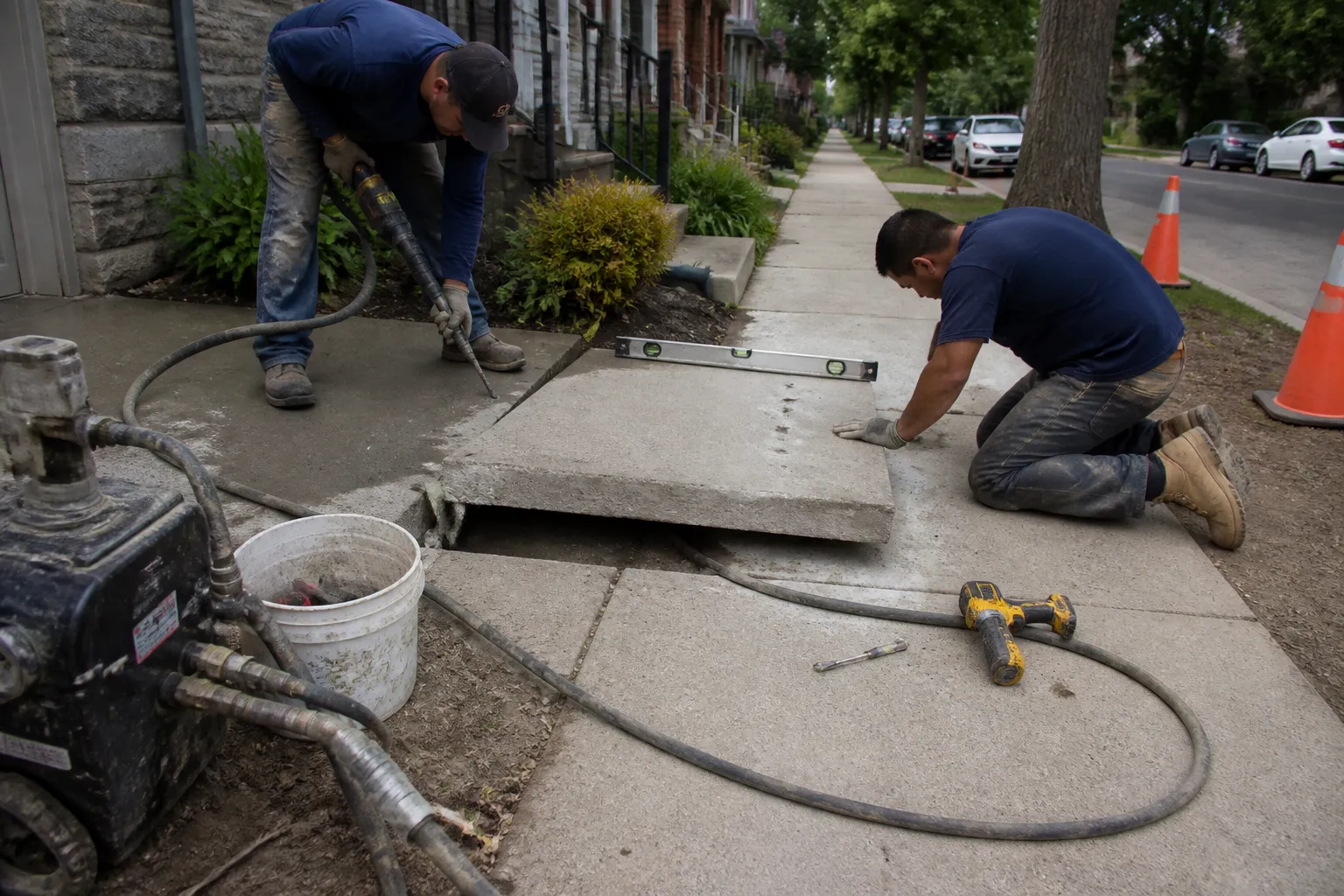
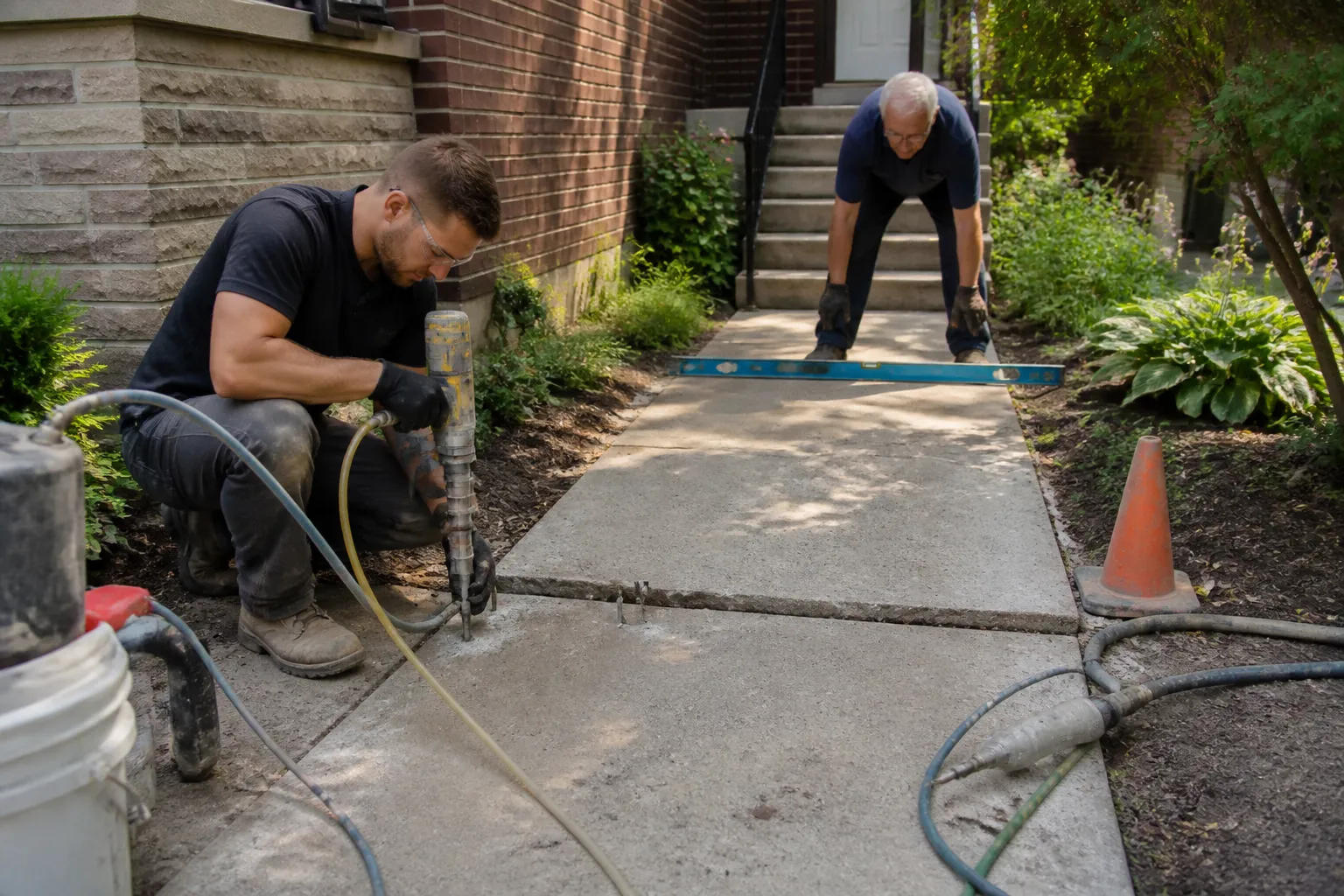
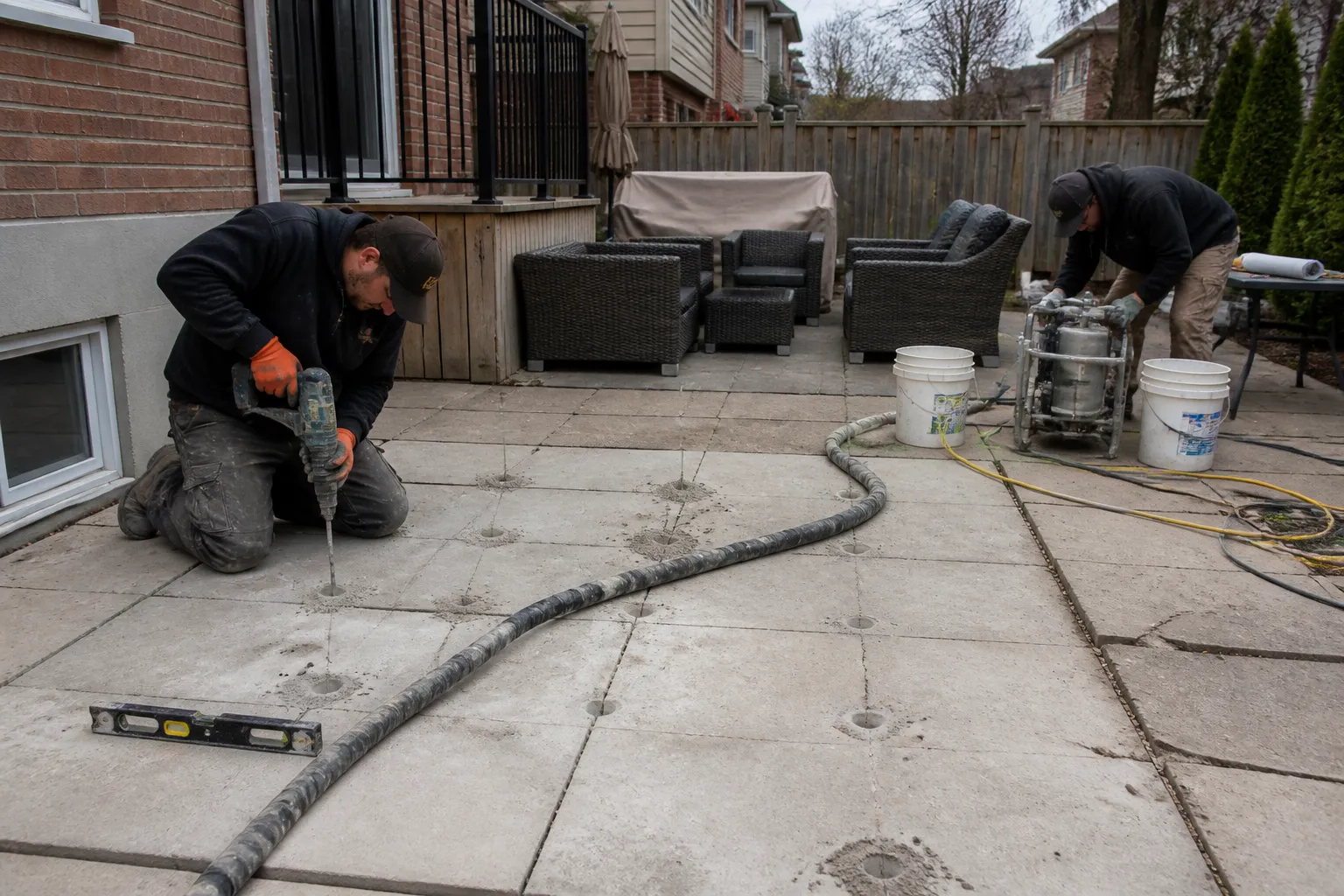
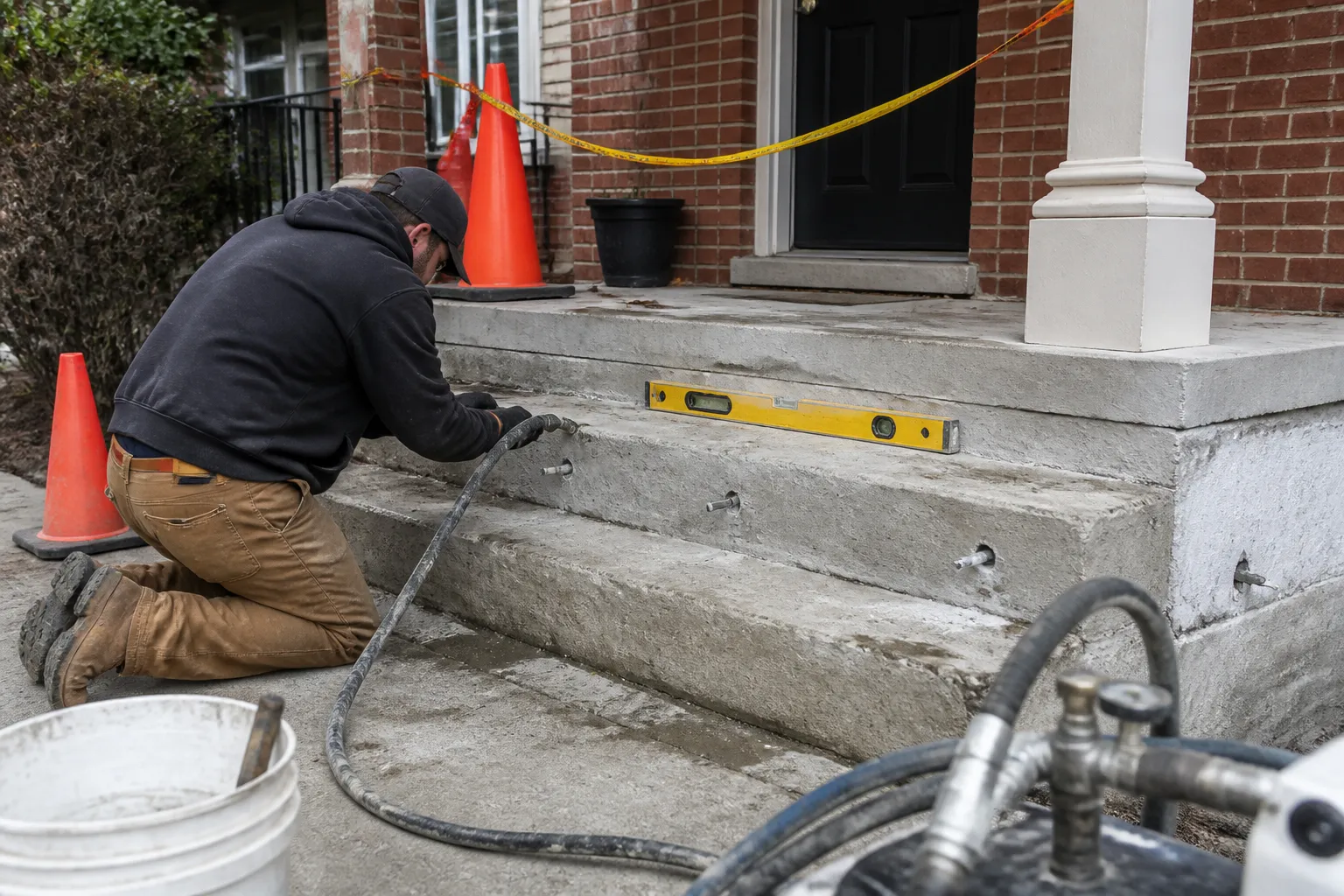
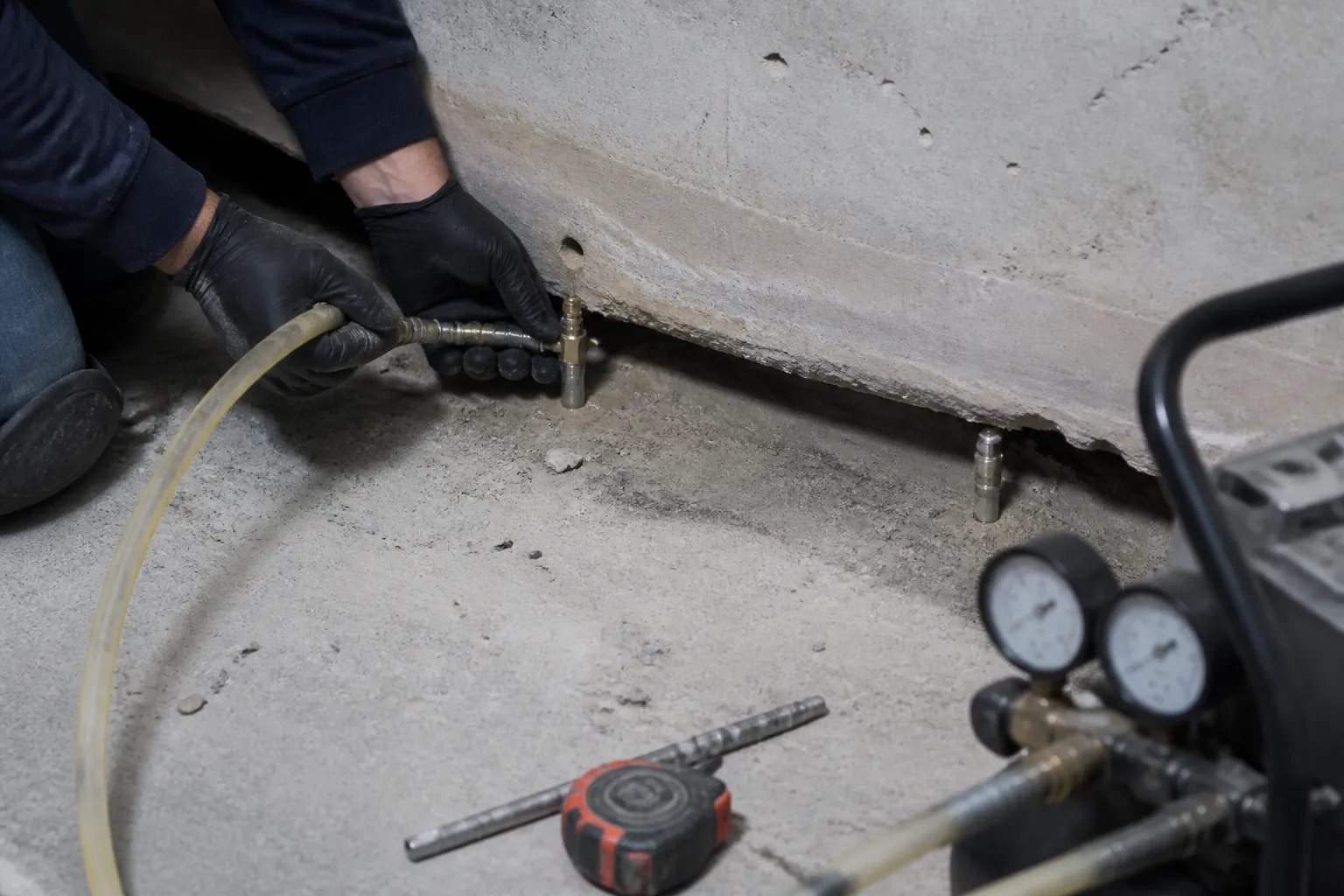
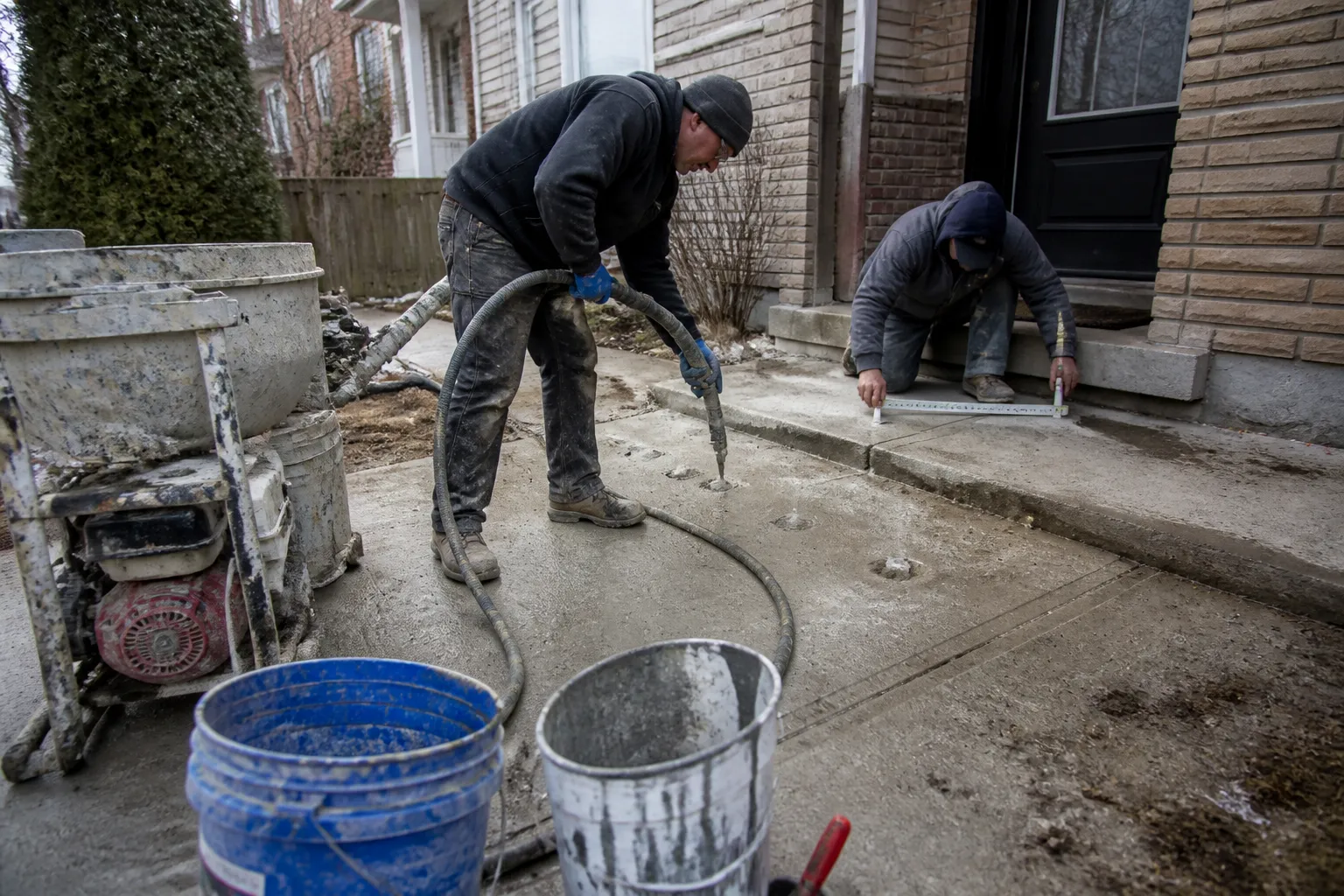
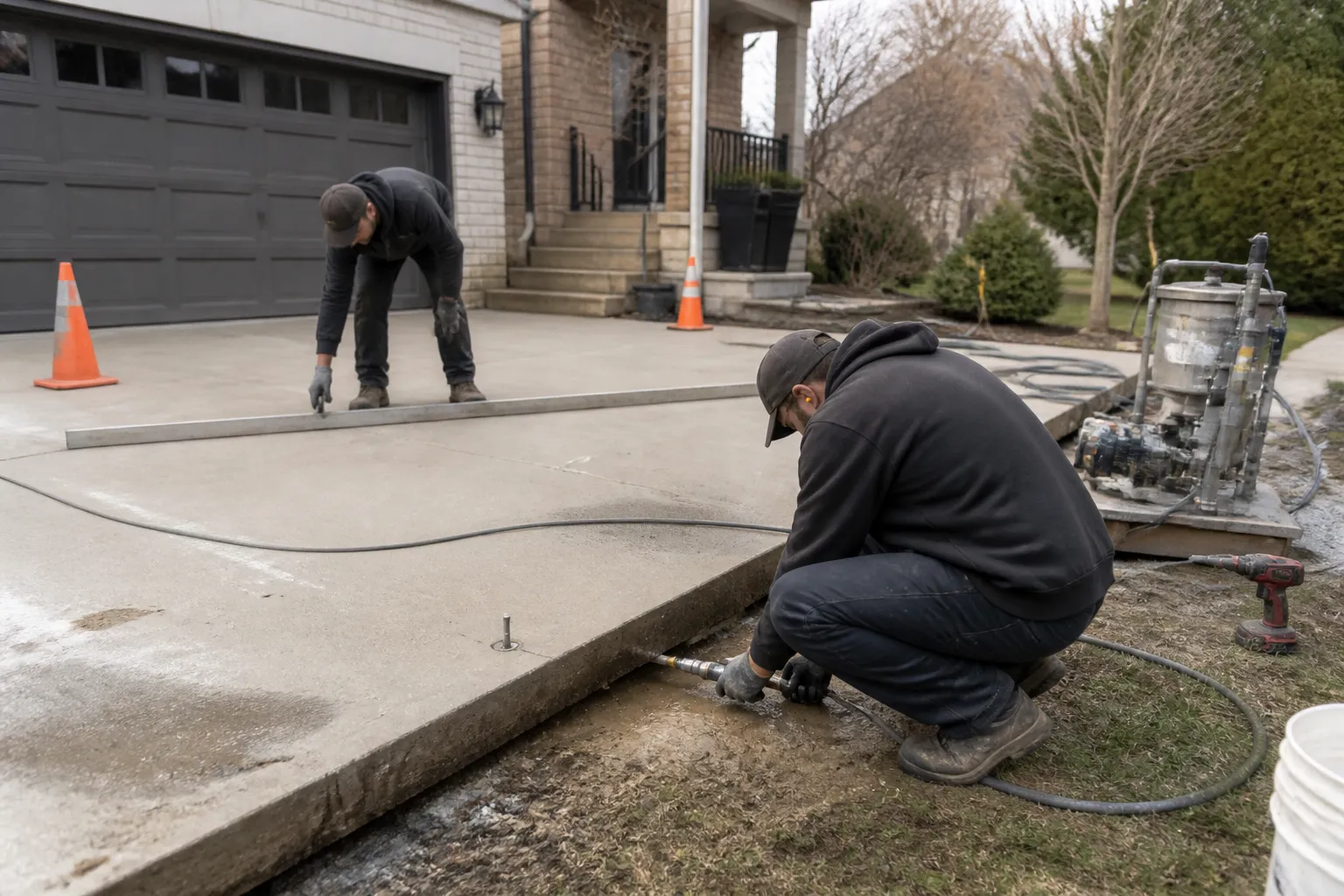
Driveway concrete leveling work in progress

Concrete Leveling in Toronto, ON

Concrete Leveling & Lifting in Toronto

Toronto Concrete Leveling helps homeowners, businesses, and property managers fix sunken slabs with polyurethane foam injection, slab jacking, mudjacking, and concrete lifting solutions designed to restore safer, more even surfaces.

  • 20+ years of experience in concrete
  • 2000+ projects completed across the GTA
  • Polyjacking, Mudjacking & Controlled Foam Injection Experts
Send a Request

Your information is secure and never shared.

Our Services

Concrete Lifting Services For Homes, Businesses, And Managed Properties

Driveway Concrete Leveling

Driveway Concrete Leveling

Lift and stabilize settled driveway slabs, garage transitions, and drainage-related low spots.

Learn More
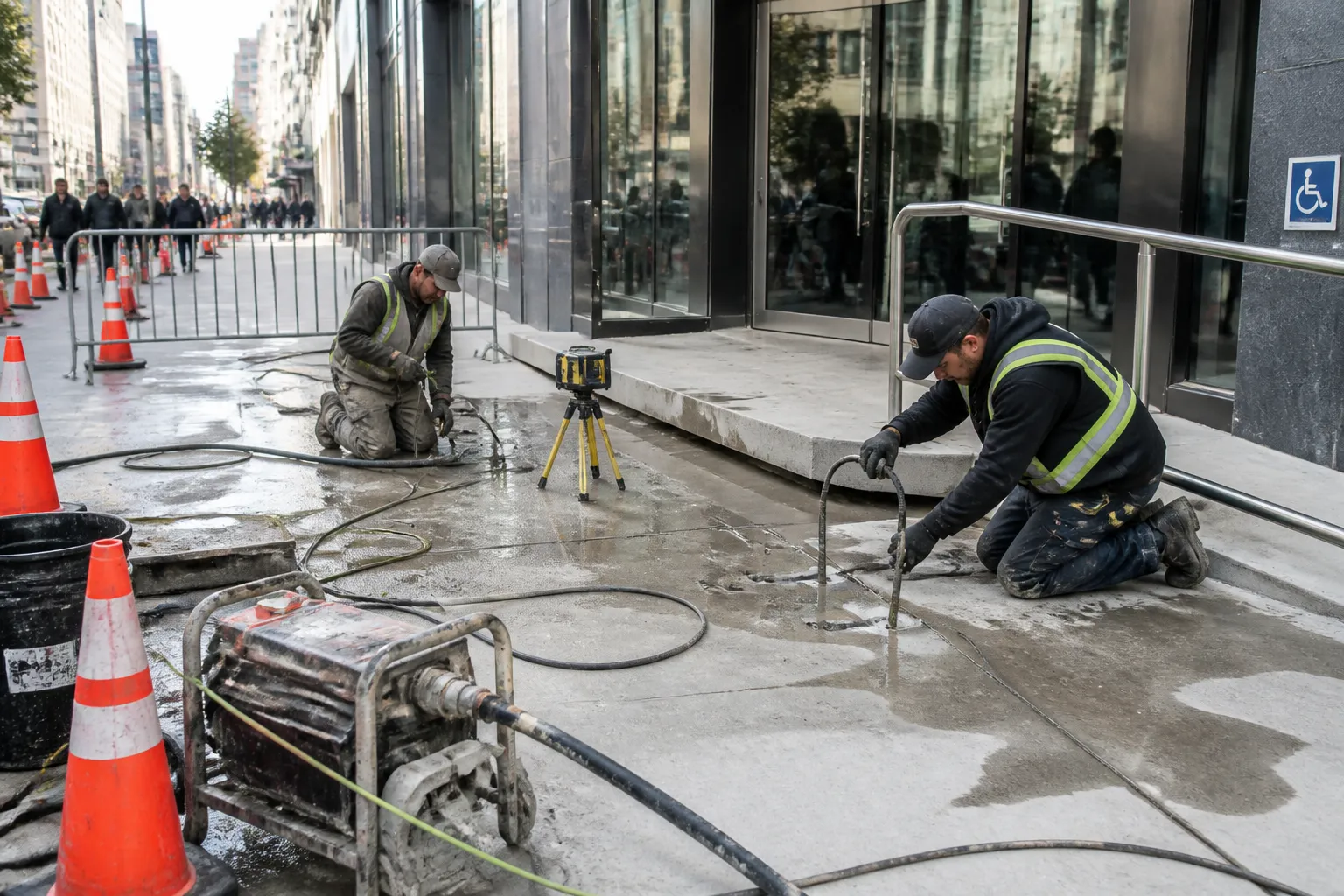
Sidewalk Concrete Leveling

Sidewalk Concrete Leveling

Restore uneven sidewalk slabs and reduce trip hazards with targeted concrete lifting.

Learn More
Walkway Concrete Leveling

Walkway Concrete Leveling

Lift settled front walks and side-yard paths to reduce trip hazards and restore smoother transitions.

Learn More
Patio Concrete Leveling

Patio Concrete Leveling

Level settled patio slabs, improve transitions, and restore support below outdoor concrete.

Learn More
Concrete Step & Porch Leveling

Concrete Step & Porch Leveling

Stabilize settled concrete steps, porch slabs, and entrance landings with targeted lifting.

Learn More
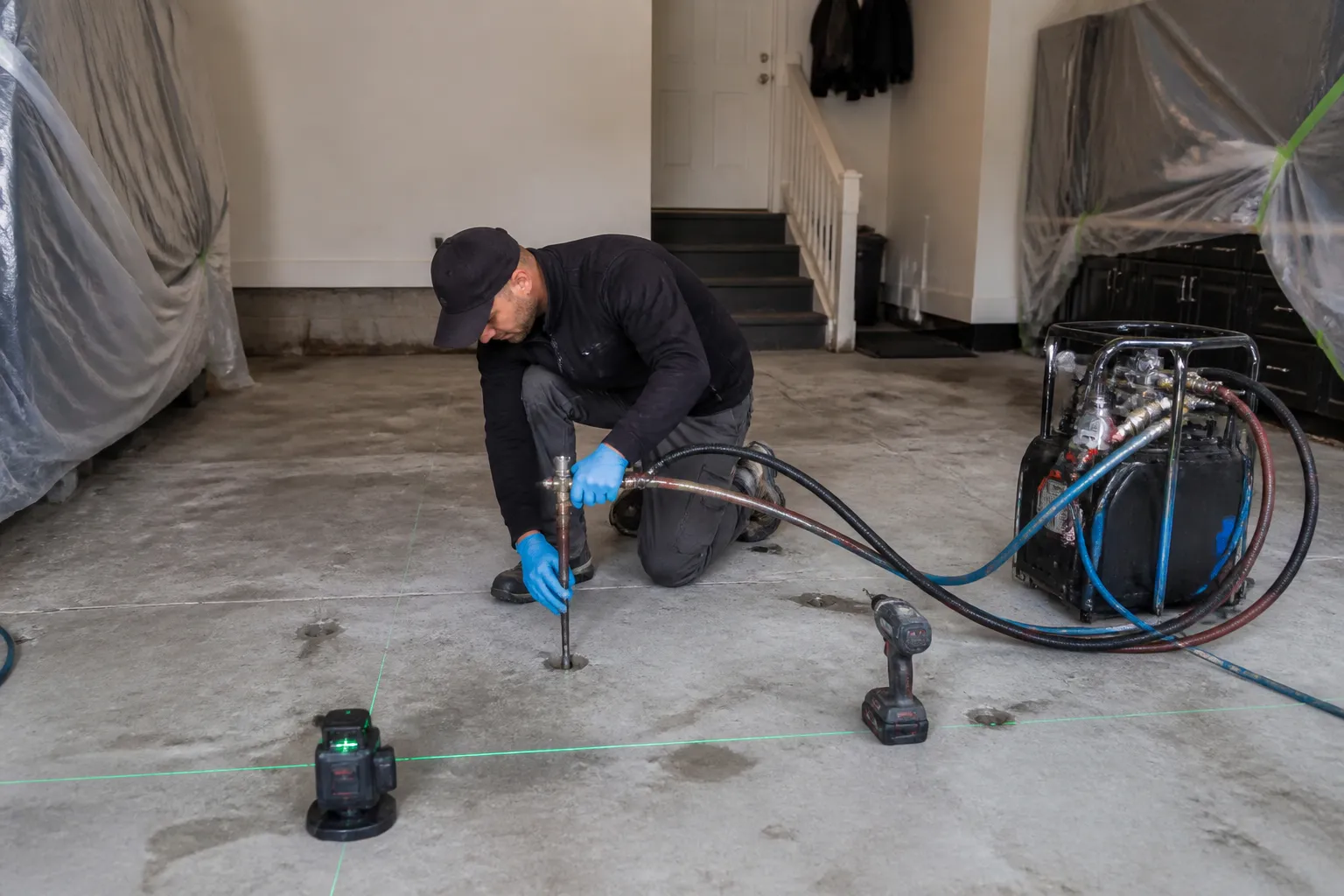
Garage Floor Concrete Leveling

Garage Floor Concrete Leveling

Lift and stabilize sunken or settled concrete garage slabs, without floor resurfacing or overlays.

Learn More
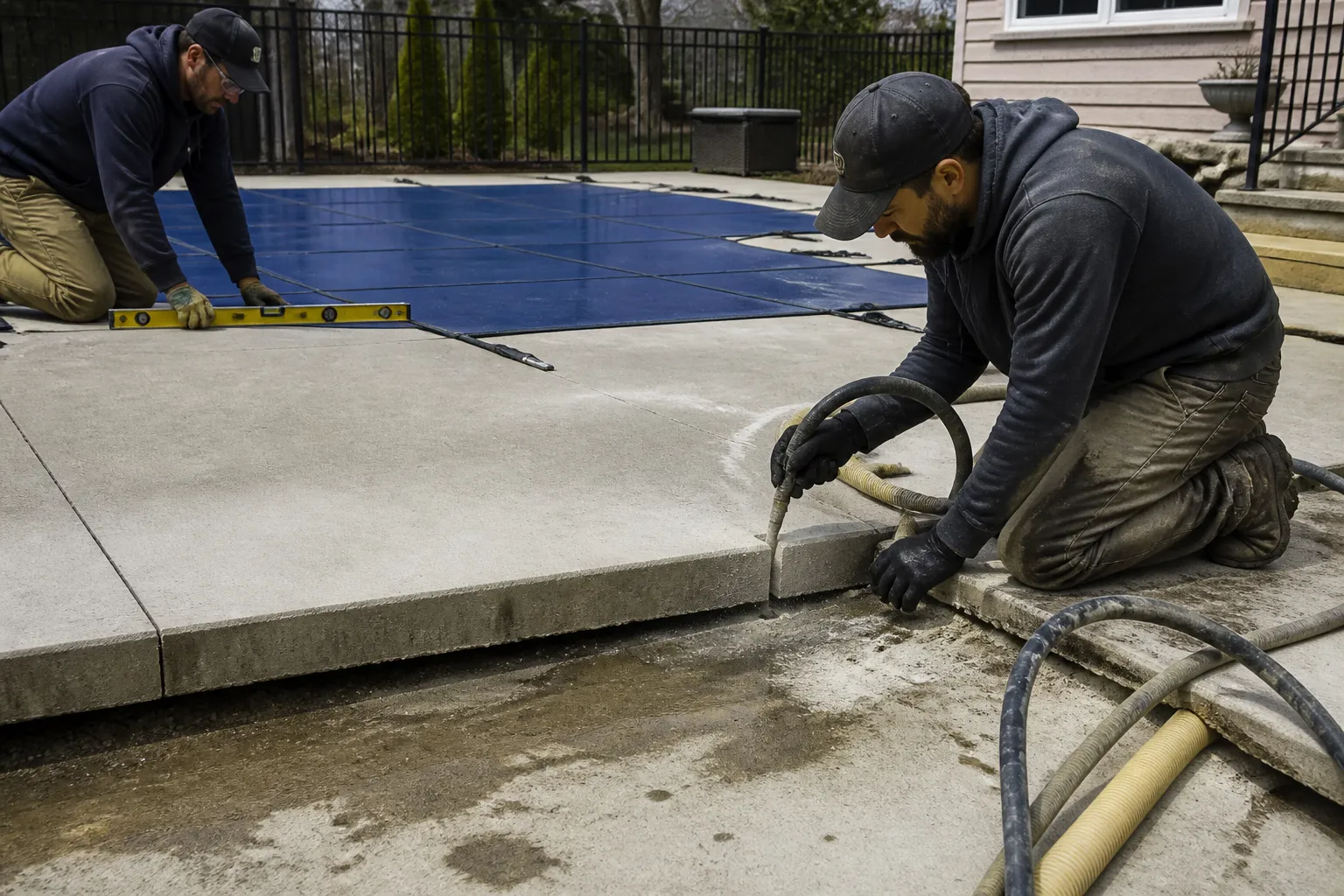
Pool Deck Concrete Leveling

Pool Deck Concrete Leveling

Restore safer, more even pool deck slabs with concrete lifting and sub-slab support.

Learn More
Commercial Concrete Leveling

Commercial Concrete Leveling

Restore uneven commercial walkways, entries, access lanes, and serviceable concrete slabs.

Learn More
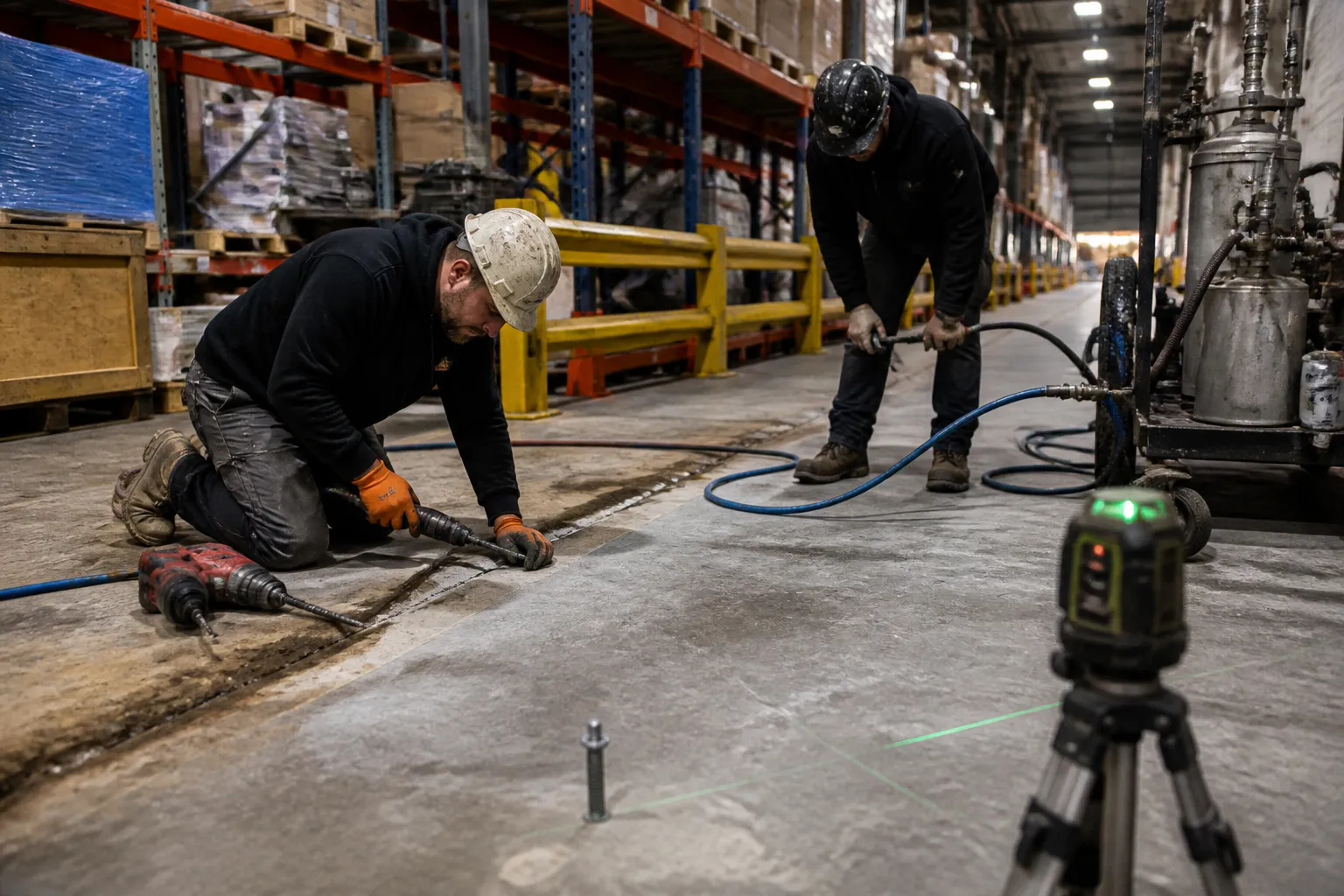
Warehouse & Industrial Concrete Leveling

Warehouse & Industrial Concrete Leveling

Restore support beneath settled warehouse slabs, loading areas, and industrial concrete with minimal disruption.

Learn More
Polyjacking & Polyurethane Concrete Lifting

Polyjacking & Polyurethane Concrete Lifting

Use controlled polyurethane foam injection to fill voids, stabilize support, and lift settled slabs.

Learn More
Mudjacking & Slab Jacking

Mudjacking & Slab Jacking

Lift and support suitable settled concrete with cementitious slurry injection beneath the slab.

Learn More
Concrete Void Filling & Slab Stabilization

Concrete Void Filling & Slab Stabilization

Fill sub-slab voids and restore support beneath serviceable concrete, with or without slab lifting.

Learn More

Lifting & Stabilization Methods

The Right Method for What’s Happening Beneath the Concrete

Sunken or unsupported concrete can result from different conditions beneath the slab. We select the lifting or stabilization method based on settlement, sub-slab voids, soil conditions, required lift and the condition of the existing concrete.

Polyjacking & Polyurethane Concrete Lifting

Expanding polyurethane foam is injected beneath settled concrete to fill voids, restore support and produce a controlled lift with relatively small injection ports.

Learn More
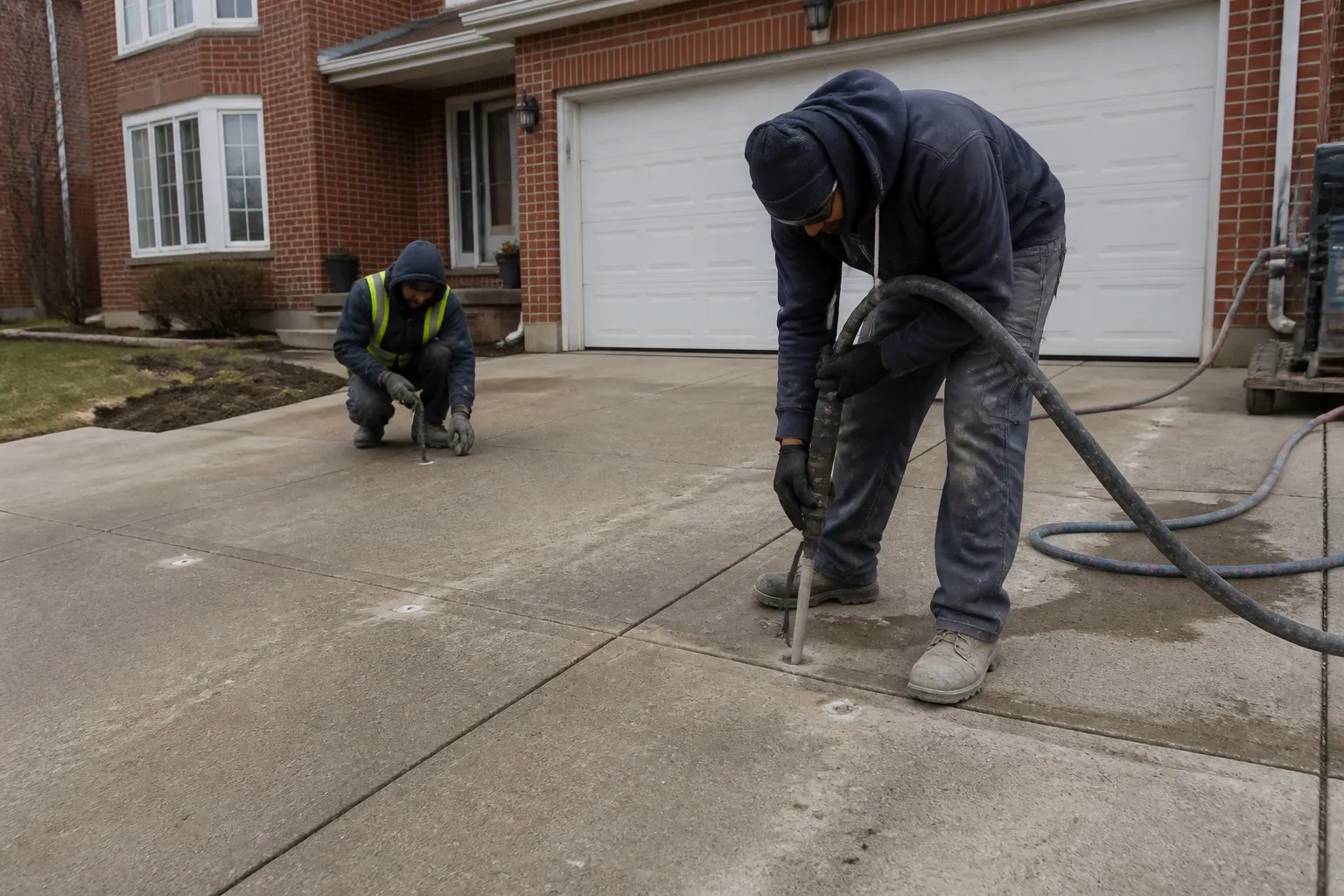
Mudjacking & Slab Jacking

A cementitious grout or slurry is pumped beneath suitable concrete slabs to fill underlying space and raise settled sections back toward the required elevation.

Learn More

Concrete Void Filling & Slab Stabilization

Polyurethane injection can fill subsurface voids caused by washout, erosion or loss of subgrade support, helping stabilize a slab even when significant lifting is not required.

Learn More
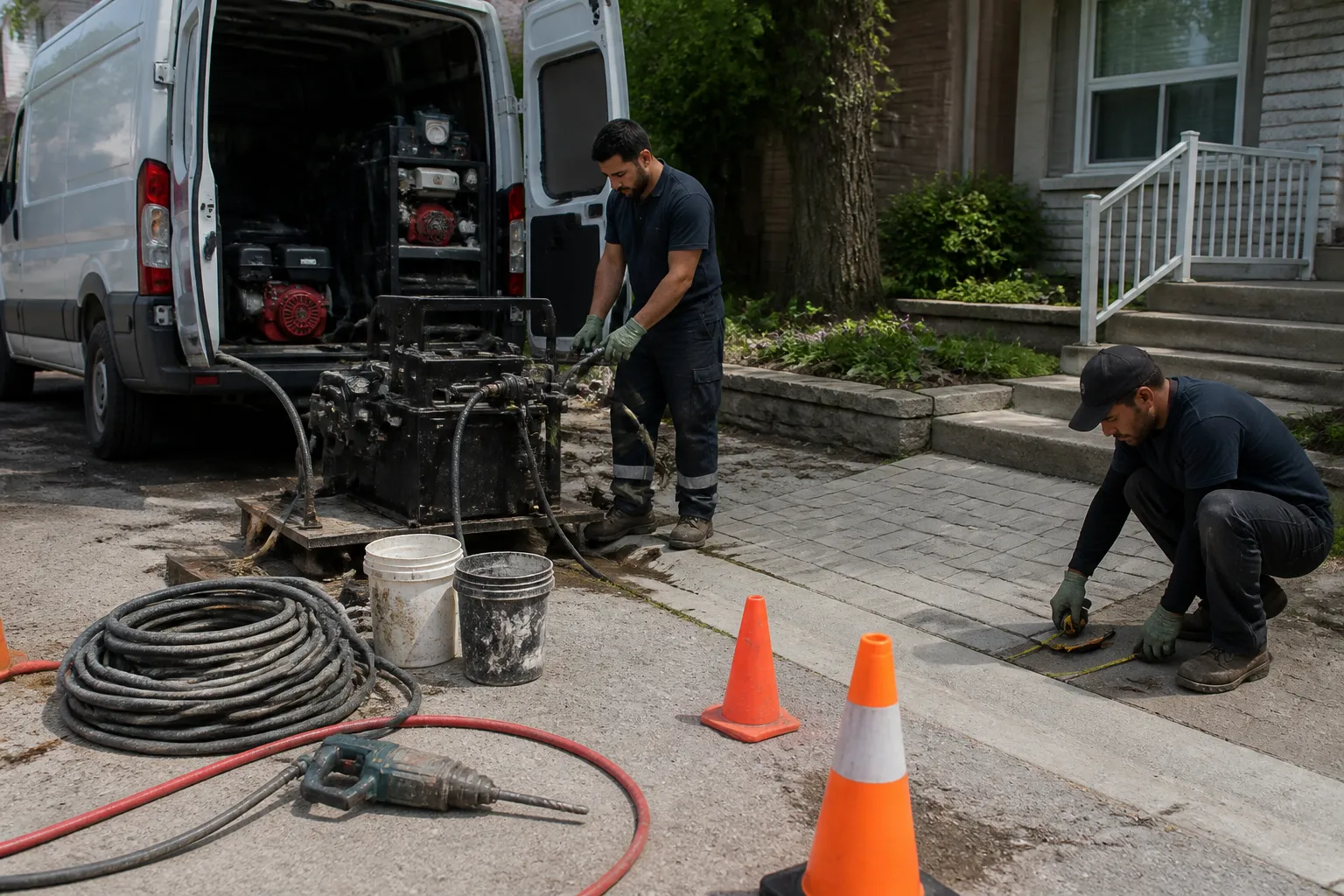
Concrete leveling crew setup work in progress

About Toronto Concrete Leveling

Why Choose Toronto Concrete Leveling?

We focus on lifting and stabilizing settled concrete rather than defaulting to slab replacement. Every recommendation starts with the concrete itself, the subgrade and soil support beneath it, drainage conditions, slab movement and the elevation that needs to be restored.

For homeowners, property managers, businesses and municipalities across Toronto, we assess whether settlement is related to soil consolidation, erosion, washout, freeze-thaw cycles or sub-slab voids, then determine whether polyurethane injection, mudjacking or void filling is appropriate for the slab and site conditions.


Signs to watch for

Small changes in a slab can point to a larger support issue.

01

A raised edge or trip hazard

One slab sitting lower than the next can create an abrupt step at a walkway, entry, or driveway joint.

02

Water pooling where it did not before

A new low spot can redirect rain and snowmelt, leaving water beside the home, garage, or walking area.

03

Gaps, cracks, or hollow areas

Open joints and movement-related cracking can signal voids or soil settlement under the concrete.

04

A surface that feels tilted

A driveway that scrapes, a patio that rocks furniture, or a garage floor that slopes can all be settlement clues.

Concrete Lifting Guide

Understand The Cause Before You Choose The Fix

Sunken concrete is usually a support problem below the slab. Learn what to look for, how concrete lifting works, and when replacement may be the better choice.

What concrete lifting solves

Restore support beneath a slab instead of starting over.

Concrete lifting raises a settled slab from below. When soil settlement, erosion, or groundwater movement creates a void, the concrete can drop even though the slab itself is still usable. A targeted lift fills that unsupported space and brings the surface back toward the right height.

Methods such as polyurethane foam injection, slab jacking, and mudjacking are selected around the slab condition, access, and the amount of movement. The objective is not simply to make concrete look better. It is to improve support, alignment, drainage, and everyday use.

How polyurethane foam injection works

Controlled lifting through small access points.

With foam injection, small holes are drilled through the slab. Expanding polyurethane is placed below the concrete, where it seeks out voids, helps stabilize loose support, and lifts the slab gradually. The material is lightweight, so it adds very little extra load to weak soil.

Foam is useful for many concrete lifting projects, especially where precision, clean access, and a focused repair are important. The exact method is always based on the slab and the cause of movement.

  1. InspectReview slab condition, movement, joints, and drainage.
  2. PlanSelect injection locations and the right lifting approach.
  3. Fill & liftFill voids and raise the slab in controlled increments.
  4. FinishCheck alignment, patch access points, and review the result.

Concrete lifting versus replacement

Two different paths for two different slab conditions.

ConsiderationConcrete lifting may fit whenReplacement may fit when
Slab conditionThe concrete is intact enough to be raised.The concrete is severely broken, deteriorated, or unstable.
Main issueSettlement, voids, and lost support below the slab.Widespread surface failure or a slab beyond a safe lift.
Work involvedTargeted access below the existing slab.Demolition, removal, base preparation, and a new pour.
Property impactOften less disruption and material waste.May be necessary when preserving the existing slab is not practical.

An assessment should focus on the concrete you have, not on forcing a one-size-fits-all answer.

Benefits of lifting the right slab

Practical improvements that matter around a property.

Safer transitions

Reducing a height difference can make a walkway, entrance, or driveway edge easier to use.

Better use of the existing surface

When the slab is still sound, lifting can preserve concrete that does not need to be removed.

Less disruption around the site

Work is focused on the affected slab rather than a full tear-out and rebuild.

More informed repair decisions

Looking at drainage, voids, and slab condition helps match the repair to the actual problem.

Why concrete sinks in the Greater Toronto Area

Most homeowners do not notice settlement until it becomes a visible problem.

A sidewalk trip hazard or an obvious driveway slope often starts years earlier, as the ground beneath the slab gradually changes. In the Greater Toronto Area, changing seasons, soil conditions, drainage issues, and everyday loading all contribute to concrete settlement. Understanding why slabs sink helps identify problems earlier and explains why polyurethane concrete lifting can be an effective repair for an intact slab.

Poor soil compaction

Concrete is only as stable as the ground beneath it. If soil was not properly compacted during construction, small air pockets remain below the slab. Over time, those pockets compress under the weight of the concrete, creating space for uneven settlement.

Freeze-thaw cycles

Toronto winters are a common cause of concrete movement. Water enters tiny cracks and surrounding soil, freezes and expands, then melts repeatedly. This gradual cycle shifts the soil supporting the slab.

Clay soil movement

Many GTA areas have clay-rich soils that expand when wet and shrink during dry periods. The supporting ground can rise and fall seasonally, eventually leaving an uneven surface.

Water erosion

Poor drainage can wash away supporting soil below driveways, sidewalks, and patios. Hidden voids develop underneath the concrete until sections begin to sink under their own weight.

Poor drainage around the home

Downspouts, negative grading, and pooling water near foundations increase water entering the surrounding soil. Over time, this can weaken support beneath nearby concrete and accelerate settlement.

Utility trench settlement

Utilities require trenches to be backfilled. Even when the work is completed correctly, disturbed soil can settle faster than surrounding ground, causing walkways, driveways, and sidewalks above a trench to dip.

Tree roots and vegetation

Growing roots may lift portions of a slab. Extensive root systems also remove moisture from nearby soil, which can increase shrinkage and settlement during dry periods.

Groundwater movement

Seasonal groundwater and snowmelt can move through soil beneath a slab. Where that water carries fine material away or changes soil moisture, settlement can follow.

Heavy vehicle loading

Concrete designed for pedestrian traffic can settle when repeatedly exposed to vehicles, delivery trucks, or equipment. The added pressure increases soil compression and can accelerate uneven movement.

Common causes of concrete settlement

CauseTypical signsRecommended solution
Poor soil compactionGradual sinking over several yearsPolyurethane concrete lifting where the slab is sound
Freeze-thaw cyclesSeasonal movement and crackingLift the slab and improve drainage where needed
Clay soil movementUneven slabs after wet or dry seasonsPolyurethane lifting with drainage improvements
Water erosionVoids beneath concrete or sudden settlementFill voids and correct drainage
Poor drainageStanding water around concreteImprove grading and lift settled slabs
Utility trench settlementStraight-line settlement over buried utilitiesPolyurethane lifting when appropriate
Tree rootsRaised or uneven slabs near mature treesLift affected sections and manage root impacts
Heavy loadingDepressed driveways or commercial slabsStructural assessment and lifting where appropriate

When should you take action?

Settlement rarely improves on its own.

Small changes in elevation often become larger as water continues entering the supporting soil beneath the slab. Early repair can reduce trip hazards, limit additional movement, and often avoid the higher cost and disruption of complete concrete replacement.

Related services

Our Service Standard

A Clear, Practical Approach To Concrete Lifting

We look beyond the visible low spot so the recommended repair accounts for slab condition, voids, drainage, and the way your concrete is used.

01

Practical Recommendations

We look at the condition of the slab and explain the repair path that best matches the problem.

02

Clear Communication

We keep the process simple so you understand the work, the options, and the expected outcome.

03

Long-Term Thinking

We focus on repairs that restore function and help extend the useful life of the concrete already in place.

Toronto Concrete Leveling work detail

Service Areas

Proudly Serving Toronto And Surrounding Communities

Toronto Concrete Leveling serves Toronto and nearby Greater Toronto Area communities with concrete lifting, slab jacking, mudjacking, and polyurethane foam injection for driveways, sidewalks, patios, garage floors, pool decks, and commercial concrete surfaces.

All Service Areas

FAQ

Concrete Lifting Questions, Answered

Concrete usually becomes uneven because its support changes below the surface. Soil can compact, water can wash fine material away, and voids can form under a slab. In Toronto, freeze-thaw cycles and frost heave can also shift support around joints and edges.

Lifting is often worth considering when the slab is still intact and the main problem is settlement, voids, or a dropped edge. Replacement may be the better option when concrete is badly broken, crumbling, severely deteriorated, or cannot be raised safely. A site assessment looks at the slab condition as well as the cause of movement.

Many driveways, sidewalks, patios, pool decks, garage floors, steps, and commercial slabs can be candidates for lifting. Each surface is evaluated on its condition, the amount of movement, and how it needs to perform after the repair.

Polyurethane foam injection uses expanding, lightweight foam placed through small access points in a settled slab. The foam fills voids beneath the concrete and can raise it in controlled increments. It is one concrete lifting option, selected when the slab, soil conditions, access, and repair goal make it suitable.

Slab jacking is the broader term for raising settled concrete by placing material beneath it. Mudjacking is one slab-jacking method that uses a slurry-like material. Polyurethane foam injection and polyjacking use expanding foam instead. The suitable method depends on the slab, the void below it, access, and the amount of lift needed.

Yes. We help commercial property owners, managers, and municipalities assess uneven walkways, entries, access routes, garage slabs, and other commercial concrete. The focus is on restoring safer, more usable surfaces while considering how the area is used and whether the slab is a sound lifting candidate.

We serve Toronto and the Greater Toronto Area, including North York, Scarborough, Etobicoke, East York, Mississauga, Vaughan, Markham, and Richmond Hill. If you are nearby and dealing with a settled concrete surface, contact us to discuss the location and project.

A trip edge can signal that a slab has lost support and may continue to move. Note where the height difference is, whether water is pooling, and whether cracks or gaps are changing. An assessment can determine whether leveling may reduce the uneven transition or whether the slab needs a different repair.

Concrete steps and porch leveling work in progress

Start With a Site Review

Get Clear Advice On Your Concrete Repair Options

Tell us about your settled driveway, uneven sidewalk, sunken patio, or garage floor, and we will help you understand whether leveling, lifting, or another repair path is the best fit.